
A practical, science-first guide to eating on semaglutide and tirzepatide — grounded in the 2025 multi-society nutrition advisory, muscle-protein research, the emerging peptide-recovery frontier, and the personalization that is quietly redefining healthspan.
By Tony Medrano, CEO & Co-Founder of LongevityPlan.AI, Harvard BA, Columbia MA, Stanford MBA/JD, & 3x Ironman Triathlon Finisher
Original Article: Best Foods While on a GLP1
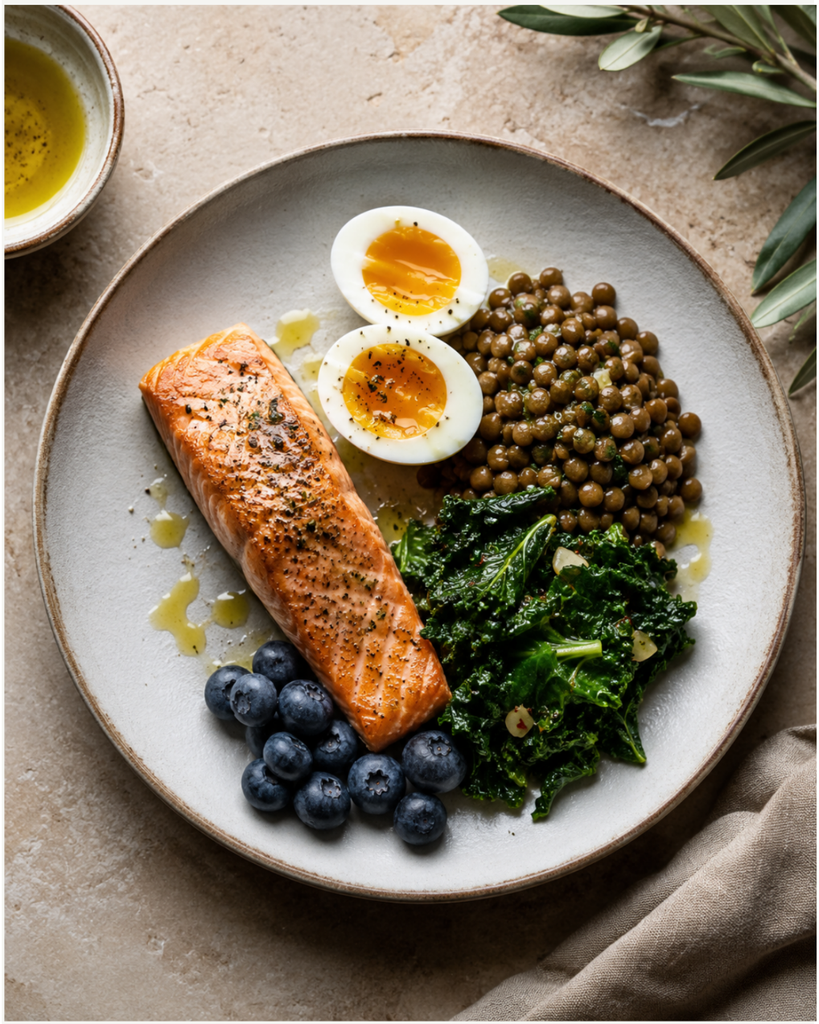
The GLP-1 plate in one image: quality protein, fermentable fiber, and heart-smart fats. On a medication that shrinks appetite, what you eat matters more than ever — and every food here is doing a specific job.
When Charles Barkley walked onto the March Madness set in 2026, a former “Round Mound of Rebound” now roughly 85 pounds lighter, the internet did what the internet does. But the Hall of Famer had never hidden the ball. Years earlier, he told a national audience, in classic Barkley fashion, “I’m taking my shot once a week.” The shot was tirzepatide. What the memes missed is the part that matters most for anyone reading this: Barkley didn’t just inject and shrink. He added golf and regular gym work specifically to hold onto muscle while the fat came off. His own doctor had reportedly delivered the motivation as bluntly as Barkley delivers everything: there are plenty of heavy young people walking around, but very few heavy old ones.
That is the whole thesis of this article in one anecdote. The drug is a spectacular catalyst. It is not, by itself, a longevity plan.
Here is the elegant biology underneath the hype: the molecule at the center of the decade’s biggest metabolic story is a peptide your own gut already makes. Glucagon-like peptide-1 is a 30-amino-acid hormone your intestinal L-cells release after you eat. Semaglutide and tirzepatide are simply longer-lasting engineered versions of it. So “what to eat on a GLP-1” is really the question of how to work with one of your body’s native satiety systems — and how to protect everything else while it does its job.
And these drugs earn their reputation. In the 17,604-patient SELECT trial, semaglutide cut major cardiovascular events by roughly 20% in people with overweight or obesity and heart disease — a benefit that held independent of how much weight anyone lost, prompting the authors in The Lancet to argue the class should be reframed as disease-modifying therapy rather than diet medicine. The wins now extend to kidney disease, heart failure, sleep apnea, and knee osteoarthritis. Yet the same appetite suppression that drives those gains creates a blind spot: eat 30–40% less food, and you risk losing muscle, bone, fiber, and a dozen micronutrients along with the fat. This is a field guide to closing that gap — through the plate, through recovery, and through data specific to one human being.
The Muscle Problem — and Why It Is Solvable
The central clinical concern with GLP-1 therapy is lean-mass loss. Across published trials, roughly 25–40% of total weight lost is fat-free mass — muscle and connective tissue — a proportion broadly similar to other major weight loss, but larger in absolute terms because the totals are larger. At the American Diabetes Association‘s 2026
Scientific Sessions, cardiologist Ian Neeland quantified why that is not merely cosmetic: each kilogram of muscle lost lowers resting energy expenditure by about 13 kilocalories a day, versus roughly 4 for a kilogram of fat. Spend muscle carelessly and you dim the metabolic pilot light that protects you against regain today and frailty later.
Stuart Phillips, Tier 1 Canada Research Chair in Skeletal Muscle Health at McMaster and author of more than 400 papers on protein metabolism, has been the field’s steadying voice. His counsel is neither alarmist nor dismissive: it is too early to know whether this muscle loss will prove clinically harmful long-term, so proceed with caution, especially in older persons, until trial results are available.” That caution is loudest for exactly the reader this is written for — the executive in her late fifties, the master’s athlete, the retired competitor like Barkley managing post-career body composition, the person rebuilding after injury. Muscle is among the strongest modifiable predictors of all-cause mortality after age fifty. You do not want to spend it on a smaller suit.
The genuinely good news is that muscle loss on these drugs is largely defensible. In a 2025 case series, patients on semaglutide or tirzepatide who trained against resistance three to five days a week and ate 1.6-2.3 g of protein per kilogram of fat-free mass posted lean-tissue changes of -6.9%, +2.5%, and +5.8% two of the three actually gained lean tissue while losing 13-33% of body weight. Summarizing the current data, Peter Attia put it plainly: when patients are coached properly on protein and lifting, clinicians are “seeing very little lean mass lost.” The variable that separates a good outcome from a bad one is not the molecule. It is the plate and the barbell – and, as we’ll see, what you do to recover from that barbell.
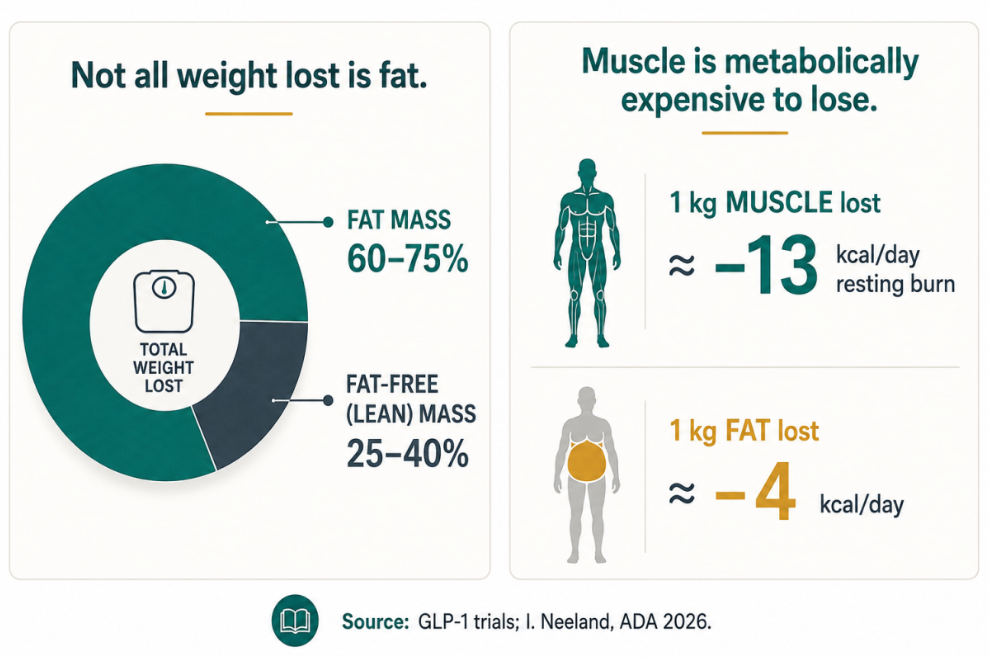
Roughly a quarter to two-fifths of the weight lost on a GLP-1 can be muscle and connective tissue, and because muscle burns more energy at rest than fat, losing it quietly lowers your metabolic “pilot light.” This is the problem the plate and the barbell are built to solve.
The Four Jobs Your Food Now Has
In May 2025, four major medical societies – the American College of Lifestyle Medicine, the American Society for Nutrition, the Obesity Medicine Association, and The Obesity Society – published a joint advisory led by Tufts’ Dariush Mozaffarian, with co-authors including Harvard’s Caroline Apovian and Fatima Cody Stanford. Mozaffarian framed the stakes cleanly: “GLP-1s represent an important advancement in obesity care,” but on their own, they are not enough; nutrition and lifestyle are what make the gains last.
Distilled to what actually lands on a fork, the advisory and the trial literature give your food four jobs. First, deliver enough protein to defend muscle a target of 1.2-1.6 g per kilogram of body weight daily, well above the 0.8 g/kg population RDA, with 25-30 g per meal to trigger muscle-protein synthesis. Second, restore the fiber that craters first: a 2025 study of GLP-1 users found average fiber intake of just 14.5 g/day against a 25-38 g reference, alongside shortfalls in calcium, iron, magnesium, potassium, and more and fiber is also the front-line answer to drug-related constipation. Third, choose fats that are cardioprotective and gentle, since slowed gastric emptying makes fried or very fatty meals nauseating. Fourth, cover the micronutrient gap, the advisory flags – iron, calcium, magnesium, zinc, and vitamins A, D, E, K, B1, B12, and C.
One operating principle governs all of it: on a suppressed appetite, protein density per bite beats meal volume, and four to five small, protein-first mini-meals almost always beat two or three large ones. Keep that in mind, and the ten foods below stop being a grocery list and start being an operating system for a smaller appetite.
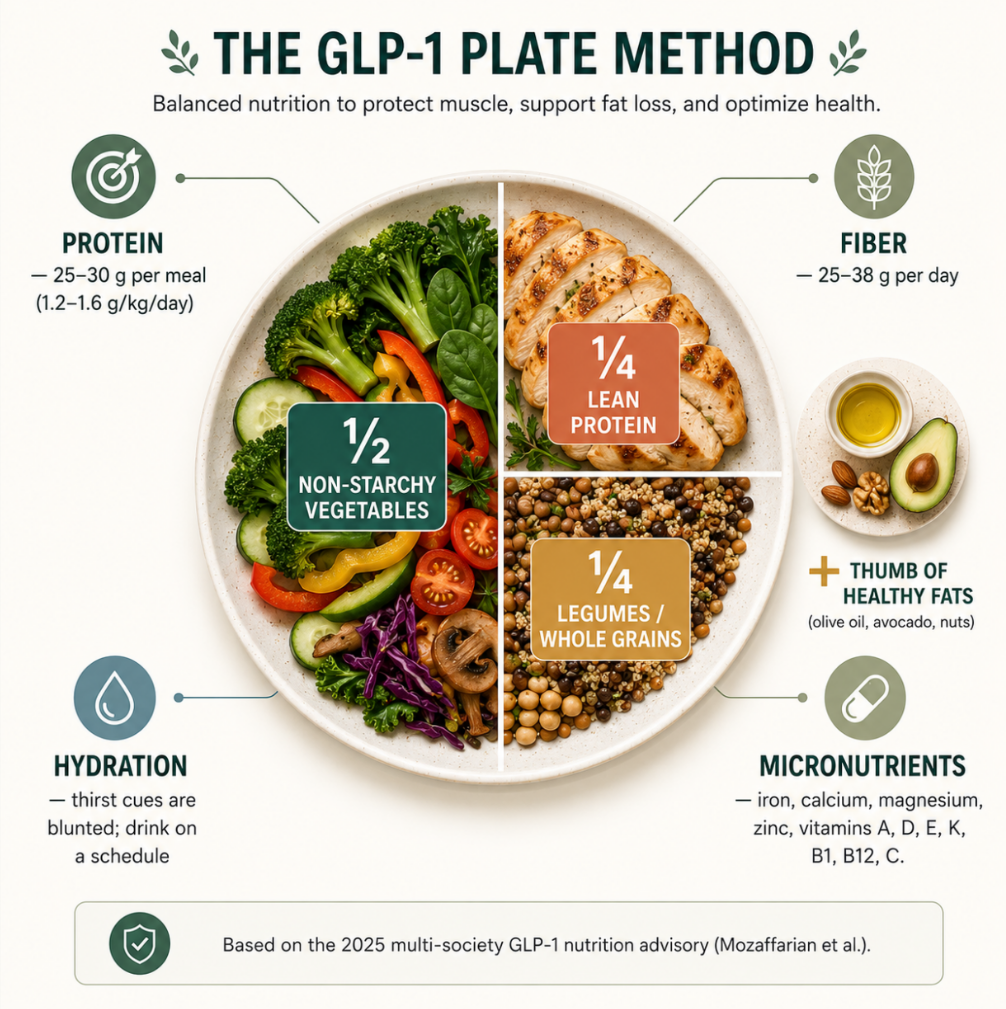
A build-your-plate cheat sheet for GLP-1 users, distilled from the 2025 multi-society advisory: half vegetables, a quarter lean protein, a quarter legumes or whole grains, a thumb of healthy fat — with protein, fiber, fluid, and micronutrient targets in the margins. Save it, screenshot it, stick it on the fridge.
Job One — Protein That Punches Above Its Volume
1. Eggs
A complete protein with all nine essential amino acids and a generous dose of leucine — the amino acid that flips the muscle-synthesis switch — eggs deliver 6–7 g of protein in a package most people tolerate even when nausea is high. They also carry choline, one of the nutrients that runs low in therapy. Soft-scrambled, they are the most forgiving quality protein in the kitchen.
2. Salmon and other fatty fish
Salmon, sardines, and trout stack two wins: high-quality protein for muscle and long-chain omega-3s for heart and brain. Emerging synthesis work suggests omega-3s may also blunt the gastrointestinal side effects that make early weeks hard. For the cardiovascular-risk reader — precisely the SELECT population — oily fish is where “protein” and “prevention” share a plate.
3. Poultry — chicken and turkey
Lean, easy to portion, and roughly 25–30 g of protein per modest fillet, poultry hits the per-meal synthesis threshold without bulk. Poached or slow-cooked versions sit far better on a slowed stomach than a heavy fried cutlet.
4. Greek yogurt and cottage cheese
When solid food genuinely will not go down — a real problem in month one — these are the rescue foods. Plain Greek yogurt brings 15–20 g of protein per cup plus calcium and live cultures; cottage cheese is slow-digesting casein, useful before bed. Clinicians reach for high-protein dairy and shakes precisely because a sippable 20–30 g of protein is achievable on days a plate is not.

When a full plate won’t go down — common in the first month — a sippable 20–30 g of protein from Greek yogurt or a shake is the rescue play. Protein density, not volume, is the whole game.
Job Two — Fiber to Feed the Gut and the Native Peptide
Here, the peptide story turns elegant. The very GLP-1 the drugs mimic is stimulated, in part, by what your gut bacteria do with fiber. When soluble, fermentable fibers reach the colon, resident microbes ferment them into short-chain fatty acids — acetate, propionate, butyrate — which activate FFAR2/GPR43 receptors on L-cells and nudge them to release more of your own GLP-1 and PYY. In animal models, high-β-glucan barley visibly raised L-cell activity and GLP-1 output.
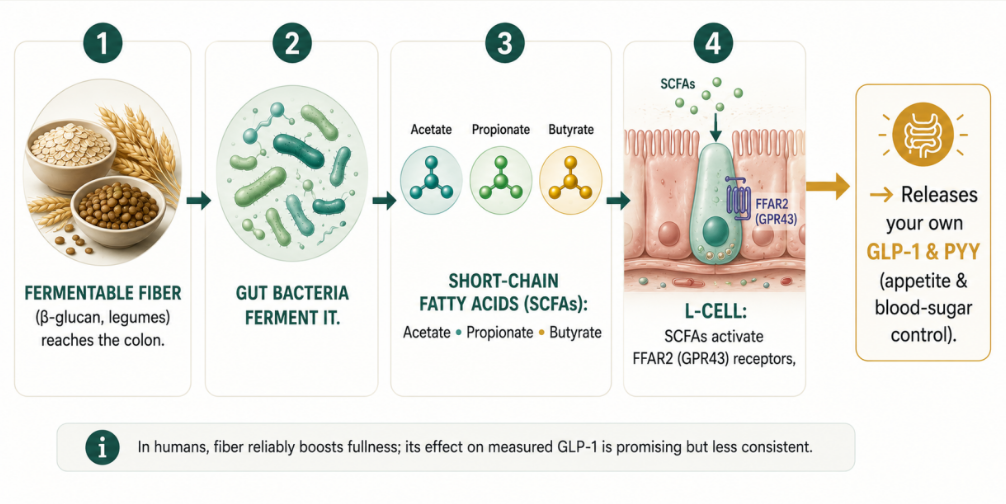
The elegant loop most people miss: the same GLP-1 the drugs imitate is one your gut makes. Feed your microbes fermentable fiber, they produce short-chain fatty acids, and those signal your intestinal L-cells to release more of your own GLP-1 and PYY — one more reason fiber is non-negotiable.
Intellectual honesty requires a caveat the wellness internet usually skips: in humans, β-glucan’s effect on satiety is remarkably consistent, while its effect on measured GLP-1 is not — a 2026 scoping review found the satiety signal positive in most trials but the hormone signal positive in only a minority. The lesson isn’t “fiber doesn’t work.” It’s that fiber earns its place on several mechanisms at once — viscosity, fullness, blood-sugar smoothing, microbiome support, regularity — not one overhyped claim. Precision beats hype, which is a decent motto for this entire category.
Read More Scientific Research from LongevityPlan.AI. Buy Peptides from LongevityPlan.AI.
5. Oats and barley (β-glucan)
The richest common sources of β-glucan slow gastric emptying, blunt glucose spikes, and feed short-chain-fatty-acid-producing bacteria. Steel-cut oats with berries and a scoop of protein is close to a purpose-built GLP-1 breakfast.
6. Legumes — lentils, chickpeas, black beans
The rare food that is simultaneously a strong plant protein and a fiber powerhouse, legumes are the single most efficient answer to the protein-and-fiber double deficit the data keep exposing. Blended into soups or hummus, they are also easy on a tender stomach.
7. Berries
Blueberries and raspberries deliver dense fiber and polyphenols in a low-volume, low-sugar package — ideal when four bites in, you’re already full. The polyphenols feed a favorable microbiome at trivial volume cost.
8. Leafy greens and cruciferous vegetables
Spinach, kale, broccoli, and Brussels sprouts are the micronutrient safety net — folate, potassium, magnesium, vitamins K and C, plus insoluble fiber that helps keep things moving and prevent constipation. Lightly steamed rather than raw, they are far kinder to a slowed gut.
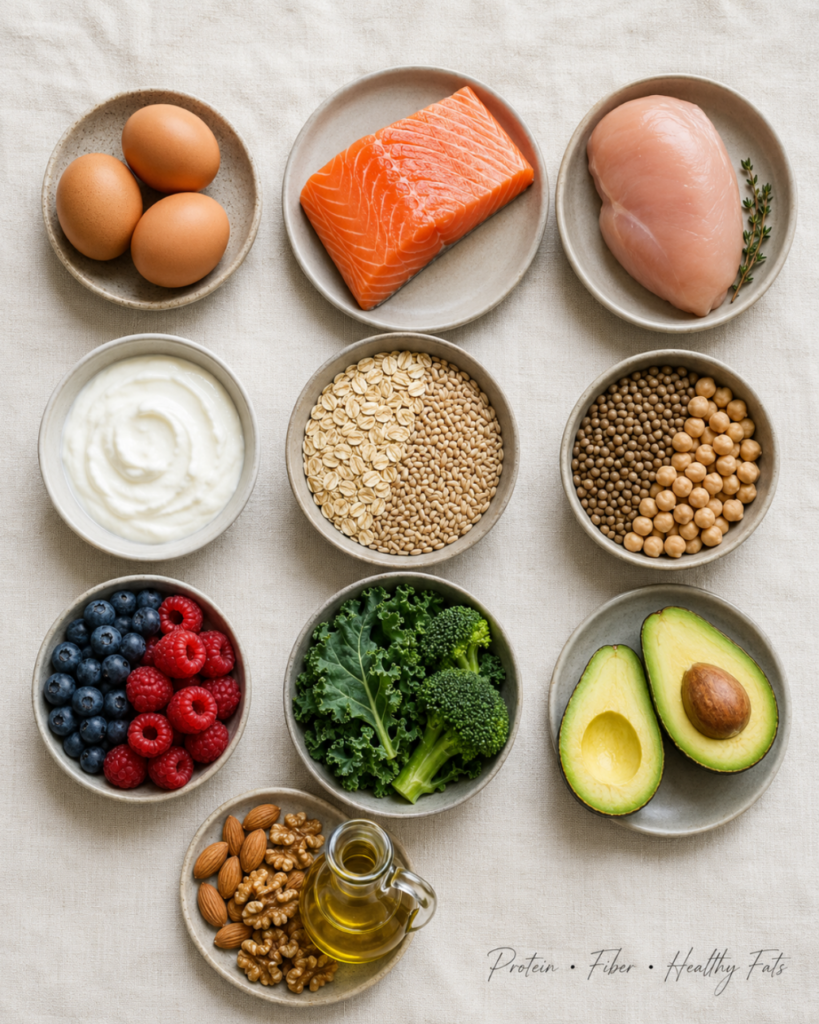
Ten foods, four jobs. Read left to right, and you’re looking at muscle protection, gut and fiber support, and cardioprotective fats — the entire GLP-1 operating system in a single grocery haul.
Job Three — Fats That Protect the Heart You’re Already Protecting
9. Extra-virgin olive oil
Rich in monounsaturated fat and anti-inflammatory polyphenols, olive oil is the fat most aligned with the cardiovascular benefits the drug is already delivering — and a drizzle makes vegetables palatable enough to actually eat, an underrated adherence tool. Use it as a finishing oil, not a frying medium.
10. Avocado, nuts, and seeds
Avocado brings monounsaturated fat, fiber, and potassium; almonds and walnuts add protein, magnesium, and plant omega-3s; chia and flax, stirred into yogurt, quietly push fiber toward the target. Because fat slows digestion, keep portions modest — the small-and-frequent principle applies here most of all.
Two priorities sit under all ten foods. Hydration: GLP-1s dull thirst, and dehydration both worsen constipation and masquerade as fatigue — fluid is the advisor’s second priority for a reason. And consistency over perfection: the plate that gets eaten beats the ideal plate that doesn’t.
The Recovery Frontier: Where Peptides Enter the Picture
Follow the muscle logic to its conclusion, and you arrive somewhere interesting. If the price of keeping muscle on a GLP-1 is training hard against resistance — and it is — then a body in a caloric deficit is being asked to repair tendon, ligament, and muscle on a reduced fuel supply. Recovery becomes the rate-limiter. This is precisely where regenerative Peptide Therapy has become one of the most exciting adjacencies in performance medicine, and it rhymes beautifully with the GLP-1 story: these, too, are compounds the body already knows how to make.
Consider the two most studied recovery peptides. BPC-157 is a synthetic pentadecapeptide derived from a protective protein found in human gastric juice; TB-500 is a synthetic fragment of thymosin beta-4, a peptide present in nearly every human cell and especially concentrated in platelets and wound fluid. Thirty years of
preclinical work paints a genuinely hopeful picture. In rat Achilles-tendon models, BPC-157 accelerated the restoration of biomechanical strength, improved collagen organization, and reduced inflammatory infiltrate versus controls, with a study in the Journal of Orthopedic Research reporting improved tendon-to-bone healing. Its proposed mechanisms are elegant — promoting angiogenesis via VEGFR2, driving tendon-cell migration via the FAK-paxillin pathway, and modulating nitric oxide to improve blood flow into injured tissue. Thymosin beta-4, meanwhile, has the strongest human signal of the pair: it accelerates dermal wound healing in both animal models and patients, and analogs have improved outcomes in chronic wounds — consistent with its role in orchestrating cell migration and new blood vessel formation. The two are mechanistically complementary, which is why the research community keeps circling the combination.
Now the honest guardrails, because credibility is the point. The great majority of evidence for BPC-157 is preclinical; large human trials are still lacking, and a 2026 Sports Medicine review is the sober reference for separating biological plausibility from proven human efficacy. Regulatory status matters too: most of these peptides are not FDA-approved for these uses, they belong under qualified medical supervision rather than self-experimentation, and — critically for the competitive reader — BPC-157 has sat on the World Anti-Doping Agency‘s prohibited list since 2022. That last point draws a sharp and useful contrast: GLP-1 agonists are not banned in sport — WADA merely added them to its 2026 monitoring program — while the regenerative peptides an athlete might reach for to recover often are. None of this dims the promise. It simply means the frontier deserves the same evidence-first respect as the plate: real mechanisms, real preclinical results, real optimism — guided by a clinician, not a forum.
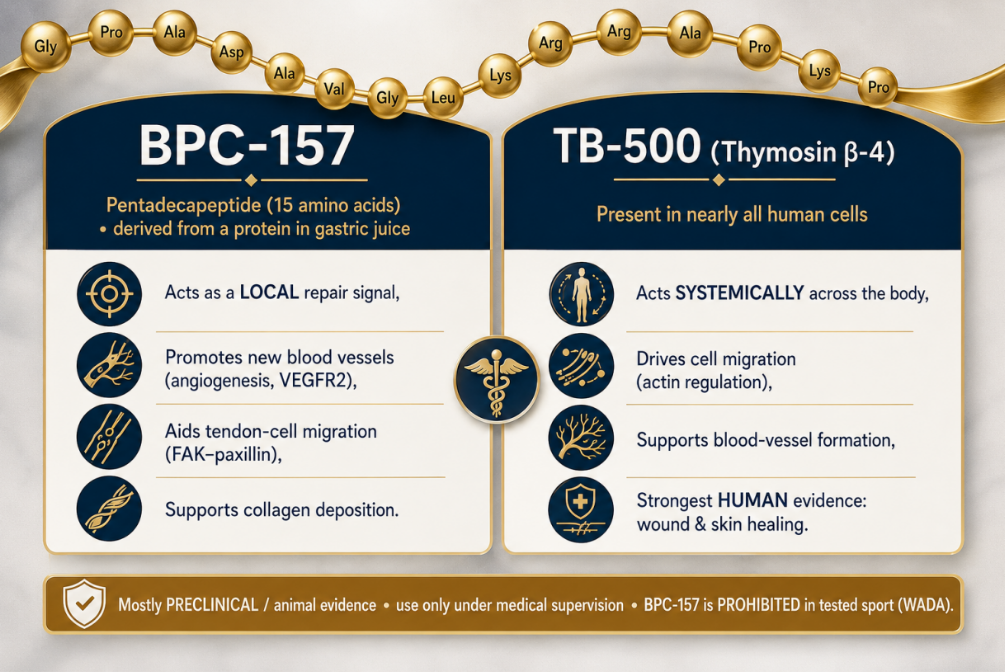
Two of the most studied recovery peptides, side by side: BPC-157 works locally to rebuild injured tissue, while thymosin β-4 (TB-500) works body-wide to mobilize repair cells. The science is genuinely promising — and, honestly, still mostly preclinical, which is exactly why it belongs in a clinician’s hands, not a forum’s.
From Population Averages to a Model of You
Everything above is the population baseline. The frontier — and the reason data science belongs in this conversation — is that individuals respond differently to identical diets and molecules, and these differences are partly encoded in the genome. Variants in FTO, MC4R, TCF7L2, GIPR, APOE, and MTHFR measurably shift how a person handles carbohydrate, fat, folate, and appetite signaling. Trials such as PREDICT and FOOD4ME have shown that tailoring diet to biology outperforms one-size-fits-all guidance, and recent multi-omics models now predict individual metabolic responses to a meal with reported accuracy above 90%. The single most valuable sentence in this entire piece may be this one: measure, don’t guess.
This is the substrate for a Digital Twin for Predictive Peptide Performance — a computational model of one person, assembled from multi-modal health data (genomics, blood biomarkers, DEXA body composition, continuous glucose, sleep and heart-rate variability) that lets a clinician forecast, rather than hope, how a given
individual will respond to a protein target, a fiber load, a training block, or a recovery protocol. The sensor layer is arriving fast: at ADA 2026, researchers presented a continuous biosensor built to track muscle status in real time and flag sarcopenia risk before a scale ever could. An intelligence layer then turns that stream into decisions. The point of predictive modeling here is not novelty — it is to convert a generic “eat more protein” into “you, specifically, are trending toward lean-mass loss; here is this week’s adjustment,” while the problem is still small.
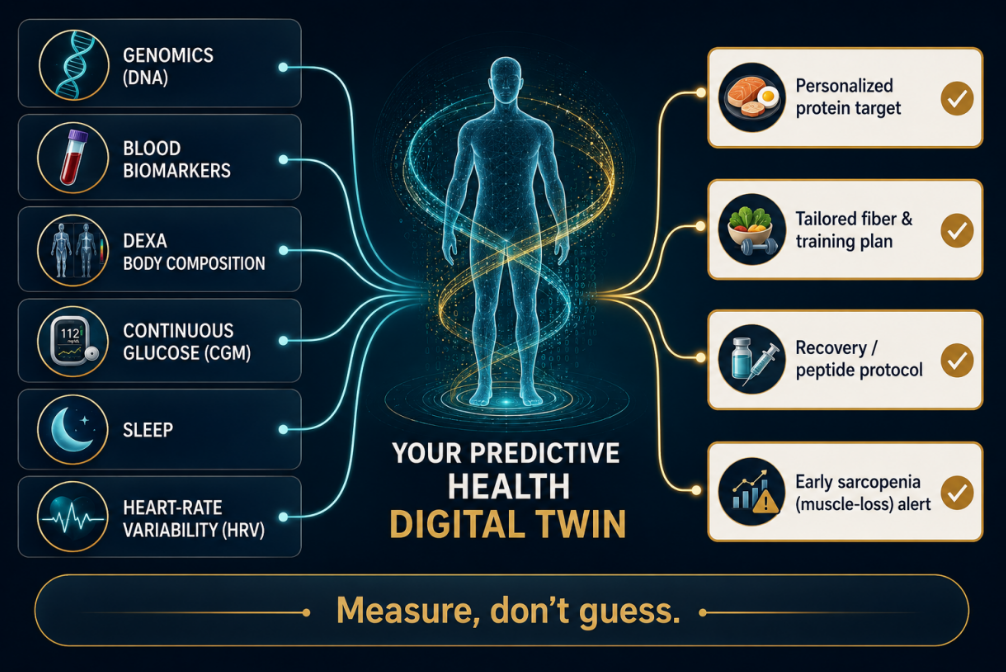
The frontier of longevity care in one picture: pull together your genetics, labs, body composition, and daily wearable signals, and a model that you can use to forecast how you’ll respond to a protein target or a training block — and flag muscle loss before a scale ever could.
The market has organized around exactly this logic, competing on how much it measures and how often it acts. Function Health (co-founded by Mark Hyman) competes on diagnostic breadth — a hundred-plus biomarkers with longevity-optimal ranges. Superpower undercuts on price and leans on AI interpretation plus prescription access. Lifeforce (co-founded by Tony Robbins) is clinician-led and quarterly, and will prescribe hormones, peptides, and GLP-1s directly. InsideTracker folds in DNA; Fountain Life (co-founded by Peter Diamandis and Tony Robbins) targets advanced imaging; and newer entrants like OneTwenty push toward the digital-twin ideal, fusing
quarterly labs with daily wearable data from Oura, Whoop, and Apple Watch and re-optimizing every ninety days. On the pharmaceutical side, Novo Nordisk and Eli Lilly are racing past first-generation weight loss into muscle quality: the BELIEVE trial paired semaglutide with the activin-pathway agent bimagrumab and cut the lean-mass share of weight loss from about 21% to 7% — 92% of the loss was fat — a result Pennington Biomedical‘s Steven Heymsfield‘s group published in Nature Medicine. Across all of them, the pattern is identical: annual snapshots giving way to continuous measurement, generic advice giving way to a model of you.
The Coach’s Advantage
Which brings us to the people who actually deliver these outcomes. A prescription is a starting gun, not a finish line — and the professional standing between the injection and a durable result is the Coach / Practitioner: the weight-loss coach, the performance coach, the registered dietitian, the nutritionist, the executive coach, the aesthetic and longevity clinician. The GLP-1 era has, quietly, been the best thing to happen to their craft in a generation. Millions of new Athlete / Patient clients now arrive already motivated, already losing fat, and urgently in need of exactly what these experts provide: how to hit protein without appetite, how to rebuild fiber, how to program resistance training, how to protect and recover tissue, how to read body composition instead of the bathroom scale.
That is the opportunity, and it is a scientific one. The counselors who will define this decade are not the ones repeating influencer talking points; they are the ones fluent in the evidence — the muscle-preservation data, the peptide research and its honest limits, the personalization tools — and able to translate it into a plan a specific client will actually follow. This is where AI-powered coaching improvements multiply a practitioner rather than replace one: the data does the pattern-detection; the coach supplies the judgment, the relationship, and the accountability that no algorithm can. A well-built Peptide Longevity Plan — pairing a GLP-1 with a genotype-aware plate, structured training, and objective tracking — is simply the disciplined, expert version of what elite programs have always done: measure, model, intervene, re-measure. Whether that expertise is delivered one-to-one, inside a Corporate Wellness Program that extends the productive years of a leadership team, or through a membership in a Longevity Club, the science is finally specific enough to be personal — and specialized enough to be worth paying an expert for.

The prescription is the starting gun; the coach is what turns it into a result. The professionals who master this science — protein, training, recovery, and the data — are the ones who convert a GLP-1 into durable strength and healthspan.
The Bottom Line
Optimism, tempered by honesty, is the right posture here. Stanford’s Michael Snyder captures the balance on the longevity question: GLP-1s clearly improve many of the conditions that shorten life, but as a standalone anti-aging drug, “the jury is still out.” That uncertainty is not a reason to wait — it is the reason to measure. Build every small meal around 25–30 g of quality protein. Rebuild the fiber the drug quietly strips. Choose fats that protect the same heart that the drug is protecting. Cover the micronutrient gap with color and sensible supplementation. Drink more than you think you need. Train against resistance, and take recovery as seriously as the workout. And track body composition, not just body weight, so you know whether the weight loss is the weight you wanted gone.
The people who invest most in their healthspan have already absorbed the meta-lesson hiding in all of this: the earlier you build the plan and the monitoring, the more the powerful tools of this era work for your longevity rather than merely against your waistline. Charles Barkley figured it out with a shot, a set of golf clubs, and a doctor willing to be honest with him. You have far better instruments than that — the plate, the training, the emerging peptide science, and a model of your own biology — and a growing bench of experts who know how to use them. A GLP-1 can be the beginning of a longevity strategy or an isolated event. The difference, as always, is in the planning.
Eat like the medication is a partner, not a magician. The peptide brings appetite control. You — and a good coach — bring the muscle, the fiber, the recovery, and the plan.

The endgame isn’t a smaller number on a scale — it’s more good years at the table. Eat like the medication is a partner, not a magician: it brings the appetite control; you (and a good coach) bring the muscle, the fiber, the recovery, and the plan.
Sign Up for FREE Daily Longevity Club Workshops
Sign Up for Affiliate Program (Pays 20%)
Subscribe to the Longevity & Peptide Optimization Newsletter
About the Author

Tony Medrano is CEO and co-founder of LongevityPlan.AI, a platform that integrates performance and health data from athletes and leverages proprietary Digital Twin for Predictive Peptide Performance™ technology, wearable data, and biomarker data to deliver personalized performance optimization and longevity recommendations to athletes, coaches, organizations, businesses, government, and the military. In addition to being a 3x technology / AI company CEO with 2 successful exits, Tony has also finished 3 Full Ironman Triathlons (140.6 mi) since 2019. He has degrees from Harvard University, Columbia University, and a JD/MBA from Stanford University.
Tony has been involved with AI and molecular diagnostic start-ups for 10 years, and also worked with the US Olympic Team, National Basketball Association (NBA), National Football League (NFL), Major League Baseball (MLB), Iditarod, FBI, NASA, U.S. Department of Health and Human Services (HHS), Google, Microsoft, Netflix, Bridgewater Associates, ConocoPhillips, British Petroleum, One Medical, and Jenny Craig, Inc. to provide technology, artificial intelligence and/or molecular diagnostics solutions to their employees.
One of Tony’s prior companies provided Conversational AI to health, fitness, and wellness companies; another delivered access to digital libraries of British Petroleum for oil discovery; and his first was a mobile app platform funded by Softbank, which resulted in a case study published by Stanford University Press, and was taught in multiple MBA programs for a decade. Tony loves to teach and mentor; he earned public school teaching credentials in NY and MA and taught inner-city high school students to give back to the underprivileged community in Harlem. He also lectured on entrepreneurship and venture capital to second-year MBA students at Stanford Business School for five years. He co-authored one of the first issued patents for mobile applications. Tony also served as a US Navy Officer commanding an emergency response team on a USN Destroyer. Tony’s military-to-CEO career has recently been chosen to air on an episode of “Operation CEO” a documentary by InsideSuccess.TV, which will air on AppleTV, Prime Video & Amazon MGM Studios, YouTubeTV, and other major platforms worldwide in 2026.
Tony’s Chronological Age is 55, his Metabolic Age is 41, and his Biological Age is 28. He is using a 12-peptide protocol from LongevityPlan.AI that leverages his AI-powered Digital Twin and is currently training for his 4th Ironman Triathlon.
Endnotes & Sources
- Mozaffarian D, Agarwal M, Apovian CM, Stanford FC, et al. “Nutritional priorities to support GLP-1 therapy for obesity: A joint Advisory from the ACLM, ASN, OMA, and The Obesity Society.” Obesity. 2025;33(8):1475–1503. doi:10.1002/oby.24336. Lead-author quote via Tufts/EurekAlert release. onlinelibrary.wiley.com/doi/10.1002/oby.24336 · eurekalert.org/news-releases/1084808
- Same advisory, co-published in the American Journal of Clinical Nutrition, 2025;122:344–367. ajcn.nutrition.org
- Zhang X, et al. “Lean Mass Loss with GLP-1 Receptor Agonists: Systematic Review.” Obesity Reviews. 2024;25:e13742. doi:10.1111/obr.13742. clinicalnutritionreport.com
- Phillips S. “Preserving muscle with GLP-1 weight loss drugs.” McMaster University / The Conversation, Aug 2025. news.mcmaster.ca
- Phillips S. “2025 was the year protein ‘jumped the shark.'” McMaster / The Conversation, Jan 2026. news.mcmaster.ca
- “Lean Mass and Musculoskeletal Preservation in GLP-1-Based Obesity Treatment.” Metabolites. 2026;16(6):364 — reporting a 2025 cross-sectional analysis of GLP-1 users’ intakes (fiber 14.5 g/day, etc.). mdpi.com/2218-1989/16/6/364
- “Preservation of lean soft tissue during weight loss induced by GLP-1 and GLP-1/GIP receptor agonists: A case series.” PMC12536186, 2025 (protein 1.6–2.3 g/kg FFM). pmc.ncbi.nlm.nih.gov/articles/PMC12536186
- de Jong JCBC, et al. “Dietary fibers to boost endogenous GLP-1 secretion and satiety: a scoping review.” Frontiers in Endocrinology. 2026;17:1880500. doi:10.3389/fendo.2026.1880500. Mechanism also in Nutrients 2024;16:2240 (PMC11279855). frontiersin.org
- Mio K, Ogawa R, Aoe S, et al. “Arabinoxylan as well as β-glucan in barley promotes GLP-1 secretion by increasing short-chain fatty acids production.” Biochem Biophys Rep. 2022. doi:10.1016/j.bbrep.2022.101343 (PMC9482107). ncbi.nlm.nih.gov/pmc/articles/PMC9482107
- Deanfield J, et al. “Semaglutide and cardiovascular outcomes by baseline and changes in adiposity (SELECT prespecified analysis).” The Lancet. Oct 2025. doi:10.1016/S0140-6736(25)01375-3. Original SELECT: Lincoff AM, et al. NEJM. 2023;389:2221–2232. thelancet.com
- FDA approval of semaglutide for MACE reduction (2024); FLOW (kidney), STEP-HFpEF (heart failure), SURMOUNT-OSA / Zepbound approval for obstructive sleep apnea (Dec 2024); semaglutide knee-osteoarthritis WOMAC benefit. Overview: glpinsiders.com
- Heymsfield SB, et al. “Bimagrumab and semaglutide alone or in combination for the treatment of obesity: a phase 2 randomized clinical trial (BELIEVE).” Nature Medicine. 2026. Pennington Biomedical / EurekAlert, Mar 2026. eurekalert.org/news-releases/1118938
- “GLP-1 Therapies in 2026: Beyond Blood Sugar and the Scale.” AJMC, ADA 2026 coverage — Ian Neeland (13 kcal/kg muscle; 1.2–1.6 g/kg protein; muscle-function evidence gap) and new agents (orforglipron; semaglutide 7.2 mg STEP UP; cagrilintide REDEFINE 1). ajmc.com
- Attia P. “AMA #86: GLP-1 RAs and muscle loss.” Peter Attia MD, 2026. peterattiamd.com/ama86
- Snyder M (Stanford), quoted in “The GLP-1 Effect: Beyond Weight Loss and into Longevity.” U.S. News & World Report, Jan 2026. health.usnews.com
- “Growing Use of GLP-1 Medications in Competitive Sports” (WADA 2026 monitoring program). Pharmacy Times, 2026. pharmacytimes.com
- “Personalized Nutrition: Tailoring Dietary Recommendations through Genetic Insights.” Nutrients. 2024;16(16):2673 (PMC11357412) — FTO, MC4R, TCF7L2, GIPR, APOE, MTHFR. And “Nutrigenomics meets multi-omics.” Genes & Nutrition. 2025 (ML >90% predictive accuracy; PREDICT, FOOD4ME). pmc.ncbi.nlm.nih.gov/articles/PMC11357412 · link.springer.com
- “Function Health vs Superpower vs InsideTracker vs Lifeforce” (2026 platform comparison; biomarker counts, pricing, prescription access, wearable fusion). Fin vs Fin, 2026. finvsfin.com
- Phillips S. “Building Muscle with Resistance Exercise and Reassessing Protein Intake” (muscle mass and mortality risk). FoundMyFitness. foundmyfitness.com/episodes/stuart-phillips
- American Diabetes Association. “New GLP-1 Therapies Enhance Quality of Weight Loss” — BELIEVE symposium and a novel continuous protein biosensor for sarcopenia, ADA 85th Scientific Sessions. diabetes.org
- “Medical nutrition in the GLP-1 era: Protein strategies, micronutrient monitoring, and lean mass preservation.” ScienceDirect, 2026 (systematic review, Jan 2015–Aug 2025). sciencedirect.com
- “Muscle loss and GLP-1R agonists use” (review; protein distribution and resistance-exercise timing). PMC12957034. pmc.ncbi.nlm.nih.gov/articles/PMC12957034
- Washington University School of Medicine. “GLP-1 RA Therapy and Exercise Training in People With Obesity.” ClinicalTrials.gov NCT07091500. clinicaltrials.gov
- AgelessRx / Zalzala S. “Effectiveness of microdosed GLP-1 in improving health, quality of life, and longevity measures.” ClinicalTrials.gov NCT07092605. clinicaltrials.gov
- Barkley’s self-disclosure of GLP-1 (tirzepatide/Mounjaro) use, via The Pat McAfee Show/Dan Patrick Show (May 2023); 352→~290 lb over six months, ~85 lb total by early 2026. nickiswift.com · healthline.com
- “Charles Barkley weight loss, explained.” Yahoo Sports, Mar 2026 (added golf and gym work to maintain muscle while losing fat; switched Mounjaro→Zepbound; Ro partnership). sports.yahoo.com
- “BPC-157 and TB-500: Background, Indications, Efficacy, and Safety” (review of origins, mechanisms, and pleiotropic tissue-repair effects). GlobalRPH, Nov 2025. globalrph.com
- “Regeneration or Risk? A Narrative Review of BPC-157 for Musculoskeletal Healing.” PMC12446177, 2025 (preclinical acceleration of tendon/muscle/ligament healing); Achilles-tendon and tendon-to-bone findings summarized. pmc.ncbi.nlm.nih.gov/articles/PMC12446177
- “BPC-157 and Tendinitis: Preclinical Research” (VEGFR2 / FAK-paxillin / nitric-oxide mechanisms; BPC-157–TB-500 complementarity; BPC-157 on WADA prohibited list category S0 since 2022; no validating human trial yet). French Peptides, May 2026. frenchpeptides.com
- Thymosin beta-4 human and animal dermal-healing evidence: “The regenerative peptide thymosin β4 accelerates the rate of dermal healing in preclinical animal models and in patients.” Ann N Y Acad Sci. 2012; plus thymosin-β4/TB-500 scoping review, Applied Sciences 2026;16(12):6202 (human signal strongest in wound/skin and ocular tissue). mdpi.com/2076-3417/16/12/6202
- Mendias CL, Awan TM. “Safety and Efficacy of Approved and Unapproved Peptide Therapies for Musculoskeletal Injuries and Athletic Performance.” Sports Medicine. 2026 Apr doi:10.1007/s40279-026-02437-0 (the sober reference distinguishing preclinical signal from proven human efficacy).
