
A basketball legend, a slowed-down stomach, and the science of turning the decade’s most famous shot into a longevity instrument.
By Tony Medrano, CEO & Co-Founder of LongevityPlan.AI, Harvard BA, Columbia MA, Stanford MBA/JD, & 3x Ironman Triathlon Finisher
This article is for education and is not medical advice.
When Charles Barkley turned up to call March Madness looking a good deal lighter, the internet did what the internet does. But the NBA Hall of Famer never hid the ball. He’d gone from 352 pounds to around 290 — roughly 60 pounds in six months — on a weekly shot of Mounjaro, and here is the part most people skipped over: he paired it with the gym. “I’m working out, I’m taking my shot once a week,” he said on Pat McAfee‘s show. Later, when supply shortages cut off his access, he regained weight — and was refreshingly blunt that the setback wasn’t willpower, it was availability.
Barkley, without necessarily meaning to, described the entire thesis of modern metabolic medicine: the difference between using one of these drugs blindly and using it like an instrument. Because here is the fact that reorients the whole Ozempic conversation for a sophisticated reader — the shot is a peptide. Semaglutide (Ozempic, Wegovy) and tirzepatide (Mounjaro, Zepbound) are engineered chains of amino acids that mimic glucagon-like peptide-1, a hormone your own gut secretes after a meal. The most consequential drugs of the decade are, quite literally, peptide therapy at population scale — which makes them the best-documented on-ramp into a field that is otherwise long on promise and short on Phase 3 data. Understand how they work, and you understand two things at once: what belongs on your plate, and where the frontier of human optimization is heading next.
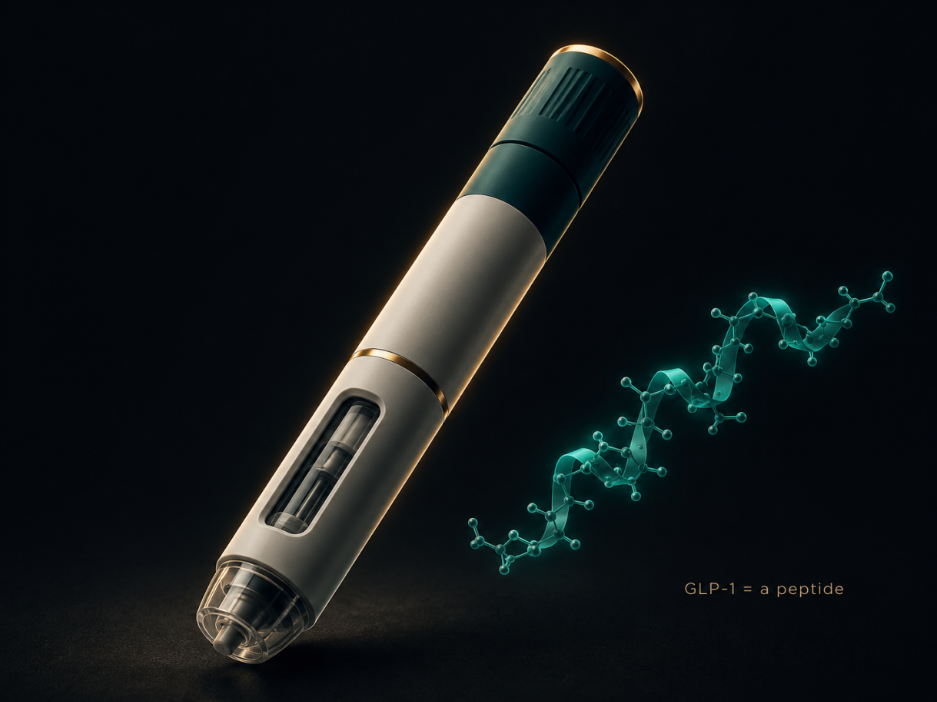
The most famous shot of the decade is, quite literally, a peptide — an engineered amino-acid chain that mimics a hormone your gut already makes.
Why the drug rewrites your plate
A GLP-1 doesn’t merely “suppress appetite.” It binds receptors throughout the gut and dramatically slows gastric emptying — the rate at which food leaves the stomach. That delay is the point: it flattens post-meal glucose spikes, blunts fat absorption, and stretches satiety for hours. But a stomach that empties slowly also punishes the wrong inputs, which is why nausea hits roughly 15–44% of users, vomiting 5–24%, and constipation 10–24%, mostly during dose escalation.
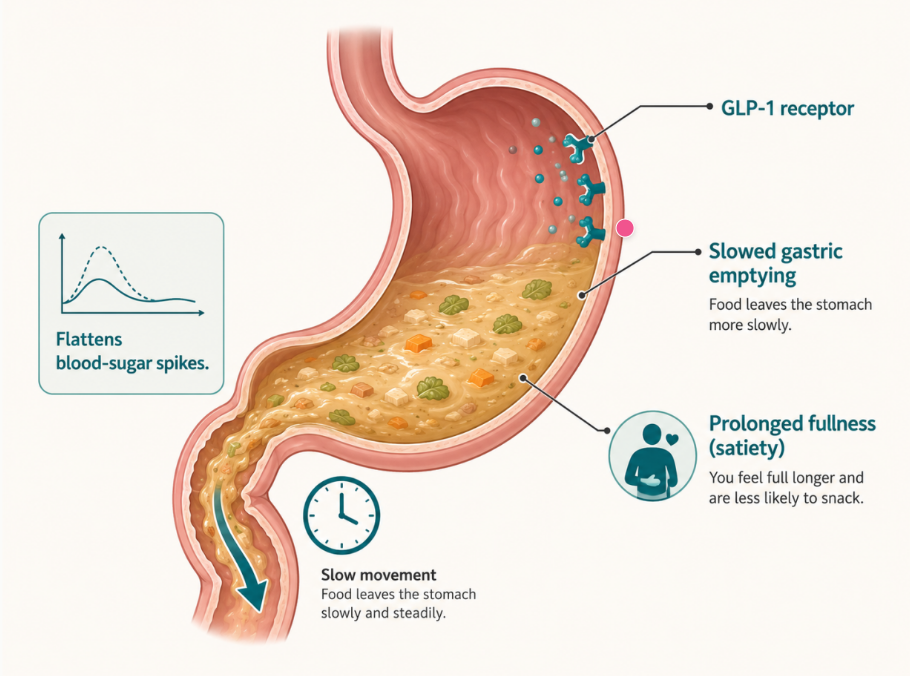
The whole mechanism in one picture: a GLP-1 slows how fast food leaves the stomach — which is why it curbs appetite, steadies blood sugar, and quietly dictates what you can comfortably eat.
Seen this way, the “worst foods” list stops being a scold and becomes physics. Four mechanistic buckets cover almost all of it.
Slow-clearing fats
Fat is the slowest macronutrient to leave the stomach, making a heavy fat load the number-one trigger for nausea and reflux. Deep-fried foods, cream sauces, and fatty processed meats aren’t villains in the abstract — they simply back up in a stomach that can’t move them along, which is why clinical tolerability guidance lands on smaller, more frequent, lower-fat meals.
Fast sugar and refined carbs
White bread, pastries, and sugary drinks spike glucose hard — the exact excursion a GLP-1 exists to flatten. They blunt the drug’s metabolic benefit and, via the rise-and-crash, tend to worsen the queasiness and fatigue of titration. On a drug engineered for glycemic stability, refined carbs are the passenger pulling the handbrake.
Irritants and gas producers
Spicy food and alcohol inflame a tract already primed for reflux; carbonation adds gas to a slow-emptying stomach, producing distension and cramping — a documented downstream consequence of the mechanism, not an individual quirk.
Sugar alcohols
Sorbitol and xylitol — the sweeteners in “sugar-free” candy and gum — are poorly absorbed and fermented in the gut. Mild trouble in a normal system; layered onto GLP-1 motility, a single stick of gum can buy an afternoon of cramping.
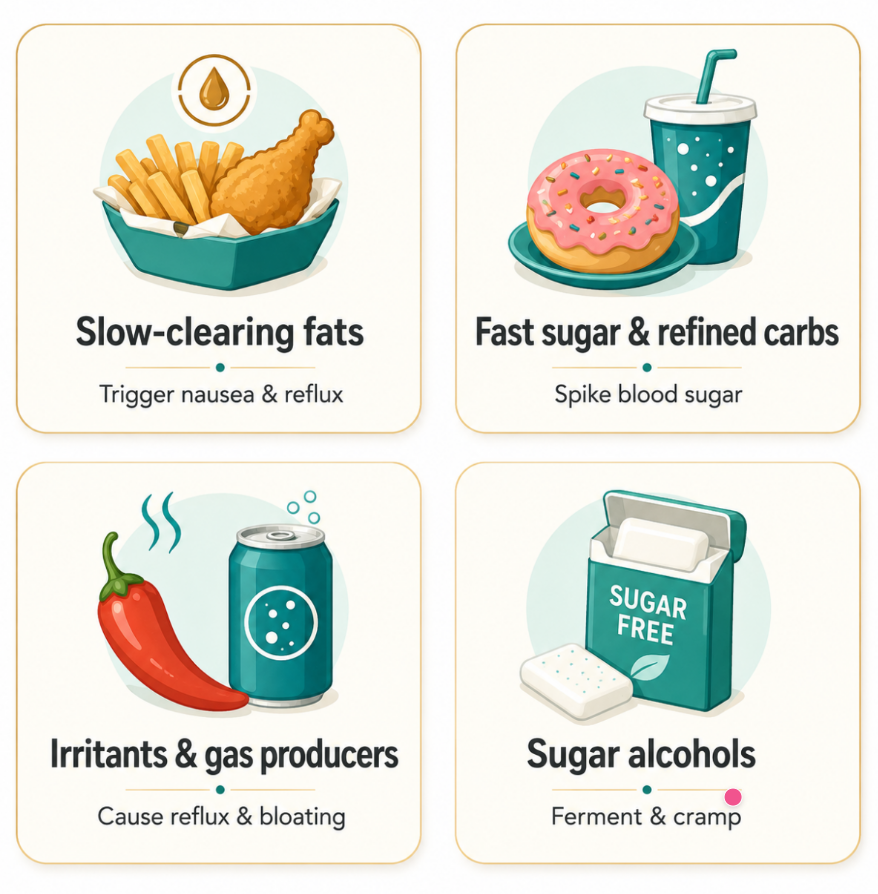
Not a scold — physics. On a slow-emptying stomach, these four categories are the usual culprits behind nausea, reflux, and bloating.
The pattern beneath all four: on a GLP-1, tolerance is deeply individual. Baseline emptying, dose, and titration speed differ from person to person, so the meal one patient handles cleanly floors the next. “One list for everyone” is the wrong frame — and, as we’ll see, the reason expertise and data matter more here than in almost any other corner of medicine.
The muscle you’re not supposed to lose
For the reader chasing healthspan rather than a number on a scale, the quiet cost of these drugs isn’t the nausea — it’s the tissue. In the pivotal trials, lean soft tissue accounted for roughly 26–40% of total weight loss with semaglutide and tirzepatide; the American Diabetes Association pegs the range at 15–40% and notes that incretin use has climbed 587% in five years. That fat-to-lean ratio is normal for rapid weight loss. The absolute muscle loss is simply larger because the weight loss is larger.
Muscle is not cosmetic. It is the body’s largest site of glucose disposal, the buffer against falls and frailty, and one of the strongest correlates of how well — and how long — you function later in life. This is the physiological heart of what Dr. Gabrielle Lyon has popularized as “muscle-centric medicine,” and what Dr. Peter Attia frames as training today for the strength you’ll need in your final active decade. Trading 6–8 kilograms of it for a smaller silhouette is an own-goal.
The reassuring news: muscle loss on a GLP-1 is largely optional, and the fix is unglamorous, well-evidenced, and available to anyone with a protein source and a set of dumbbells.
Two levers close most of the gap. Protein intakes near 1.6–2.4 g per kilogram of body weight daily, anchored across meals, is the target the muscle-preservation literature converges on, with appetite suppression making it the central practical challenge, since a shrinking appetite crowds out protein first.11 And resistance training: in a
documented case series, patients who lifted 3–5 days a week while hitting those protein numbers saw lean-tissue changes ranging from a modest 6.9% loss to actual gains of +2.5% and +5.8%, even while shedding a third of their body weight.7 Randomized trials are now formalizing what those early signals show.12
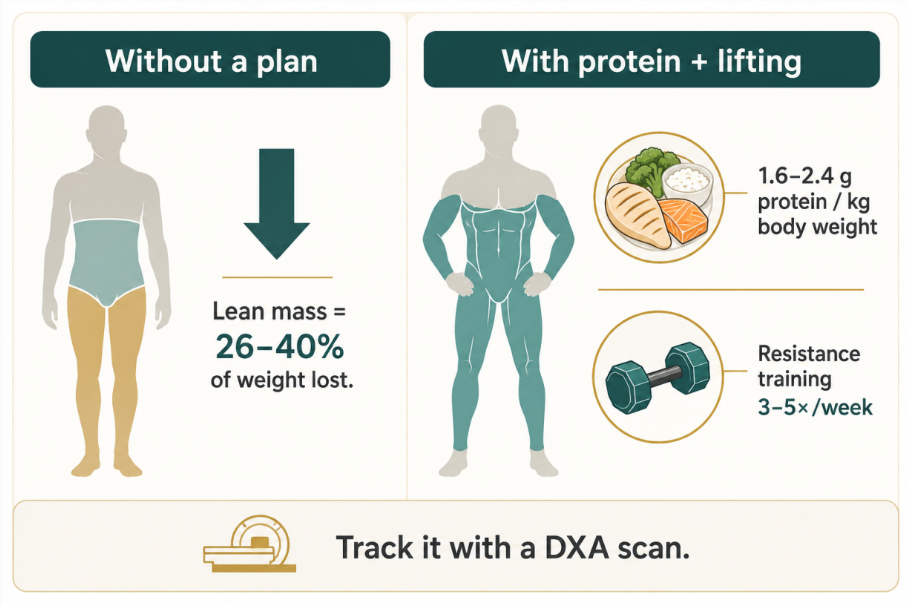
Muscle loss on a GLP-1 is largely optional. Anchor meals around protein, lift a few times a week, and verify with a body-composition scan — not the bathroom scale. It’s exactly what Barkley meant by “working out and taking my shot.”
This is exactly what Barkley was doing on that once-a-week cadence: letting the peptide manage the fat while he defended the lean. The drug controls one side of the equation; the barbell and the plate control the other — and only one of those requires a prescription. A DXA scan every few months turns the whole thing from a hunch into a trend line, which is the difference between finishing a cut leaner and stronger versus merely smaller and weaker.
Read More Scientific Research from LongevityPlan.AI.
Buy Peptides from LongevityPlan.AI.
The peptide that keeps overdelivering
What makes GLP-1s such a compelling advertisement for peptide therapy is that they keep delivering more than their labels promise. Beyond glucose and weight, the class has been shown to reduce cardiovascular and renal risks and may improve outcomes in fatty liver disease. And the most intriguing frontier isn’t in the gut at all — it’s in the brain.
GLP-1 receptors sit in the reward and motivation circuits. In a 2025 randomized trial in JAMA Psychiatry, low-dose semaglutide significantly cut weekly alcohol craving and the amount consumed in a lab setting, versus placebo, across 48 adults with alcohol use disorder — with reductions in cigarettes per day showing up in the smokers, too. UNC’s Klara Klein, a co-author, has been careful to note that the effect appears to be brain-mediated, working through reward processing rather than the stomach, and that larger trials are still needed. A 2025 systematic review reached the same promising-not-proven verdict. The takeaway for a longevity-minded reader is the pattern itself: a peptide designed for blood sugar is quietly rewriting our model of appetite, craving, and the biology of “enough.”
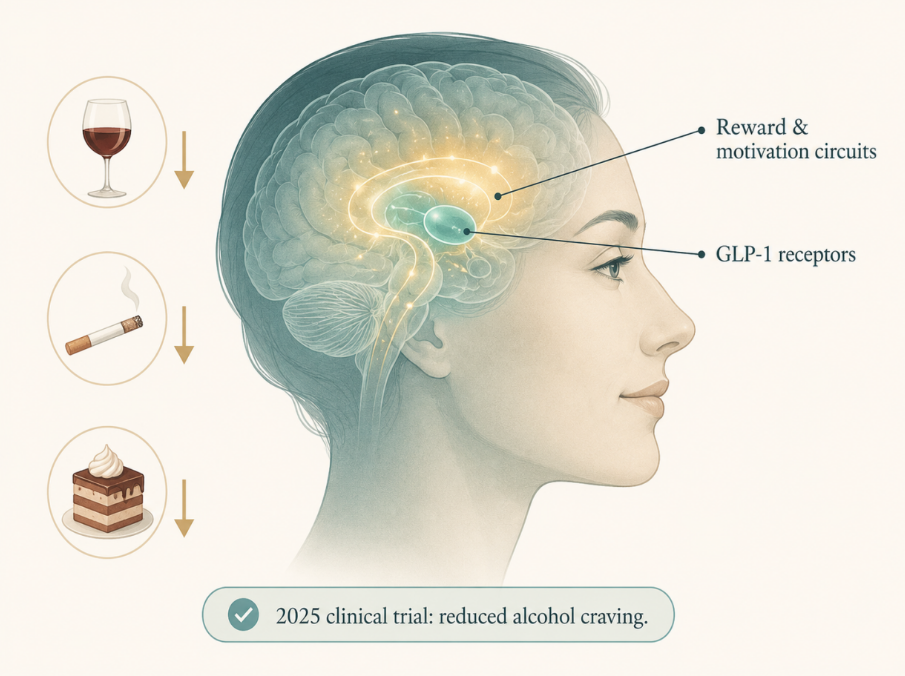
Beyond the gut: GLP-1 receptors sit in the brain’s reward circuits, and early trials show semaglutide can quiet cravings for alcohol and cigarettes — a hint at how much these peptides still have to teach us.
The frontier: what the research peptides are showing
If the GLP-1s prove peptide therapy can be transformative, the next generation is where the field gets genuinely exciting — and where a credible guide has to be both enthusiastic and precise. The most studied of these is BPC-157, a 15-amino-acid “body protection compound” derived from a protein in human gastric juice, and the preclinical record is, frankly, remarkable.
In the foundational 2003 study, rats with a fully transected Achilles tendon that received BPC-157 healed significantly better than controls — with greater load-to-failure, higher stiffness (Young’s modulus), and better functional recovery across biomechanical, microscopic, and macroscopic measures. Follow-up work found the peptide accelerates tendon-cell outgrowth and, strikingly, upregulates the growth-hormone receptor in tendon fibroblasts — a plausible mechanism for its regenerative reach. The same signal repeats across ligament (medial collateral) transection, muscle-crush injury, and delayed bone-healing models, with faster repair and less scar tissue. Just as notably for the risk-conscious, animal studies and an early human safety pilot have reported it to be well tolerated even at high doses, with no identified toxic or lethal thresholds and no observed teratogenic or genotoxic effects — a favorable preclinical safety picture that helps explain the clinical interest.
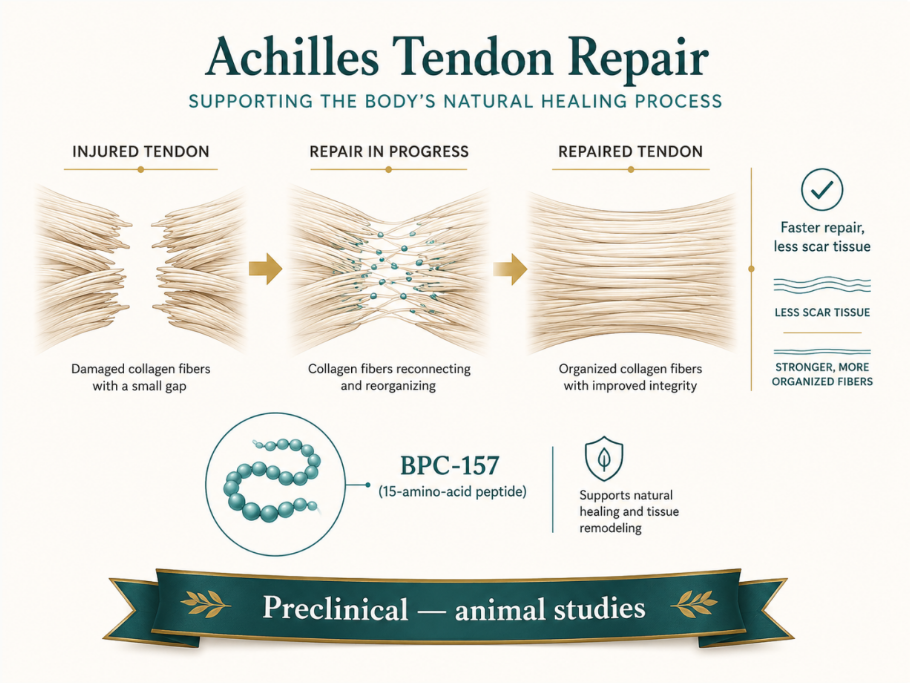
In rat models, the peptide BPC-157 sped tendon, ligament, muscle, and bone repair with a favorable safety profile — promising and deeply studied in animals. Human trials are the next step.
Now, the honesty that keeps this credible: nearly all of that evidence is preclinical. A 2025 systematic review found 35 animal studies of BPC-157 for musculoskeletal healing and only a single clinical study in humans. The peptide is not FDA-approved and has no USP monograph; it appears on WADA‘s S0 non-approved list and the Department of Defense‘s prohibited-ingredient list. But the regulatory posture is thawing rather than hardening: in April 2026 the FDA removed BPC-157, TB-500, and CJC-1295 from its restrictive Category 2 list, and a Pharmacy Compounding Advisory Committee review is on the calendar — a sign the science is being taken seriously enough to formally reconsider.
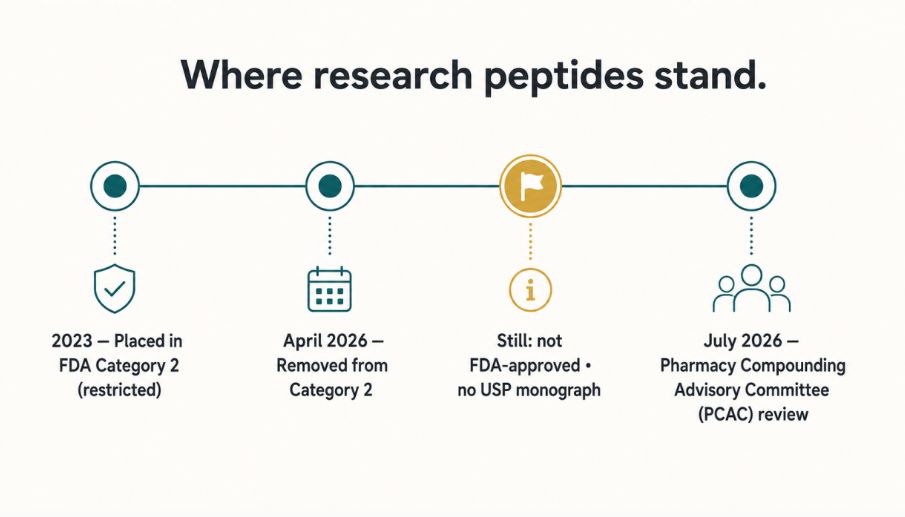
The rules are catching up to the science. Research peptides sit in an evolving gray zone — neither approved nor banned — which is exactly why a qualified clinician belongs at the center of any protocol.
The mature framing — the one that ages well — is that “derived from a molecule the body already makes” is a promising hypothesis worth rigorous study, not a finished safety guarantee (insulin and botulinum toxin are biologically derived, too). The research peptides belong in the category of frontier, not fringe: unusually deep and consistent animal evidence, an encouraging early safety signal, human trials still to come, and a regulatory environment finally catching up to the interest.
Where expertise turns molecules into results
Every thread so far — who tolerates which foods, who preserves muscle, who responds to a given dose, who’s a candidate for what’s coming next — points at the same conclusion: the outcome is decided less by the molecule than by the plan around it. And that plan is not a prescription. It’s a system, and it’s a profession.
Start with the biology of difference. Drug metabolism, receptor sensitivity, and appetite signaling all carry heritable components, which is why a baseline genomic assessment increasingly anchors serious personalization — the same protocol can be a home run for one person and a shrug for another. Layer on the data: continuous glucose response to meals, body-composition trends from periodic DXA, protein intake, training volume, sleep, and symptom logs that reveal which foods a particular stomach tolerates. That is the sensor layer. The intelligence layer turns the stream into foresight — not “eat less fat,” but “your reflux tracks with fat loads above a personal threshold, your lean mass is drifting down 0.3 kg a month, and your protein has quietly fallen to 1.1 g/kg since your appetite dropped.” Genomics plus that live data feed is precisely the foundation a Digital Twin for Predictive Peptide Performance is built to model: forecasting how a given Athlete / Patient will respond, rather than merely recording what already happened.
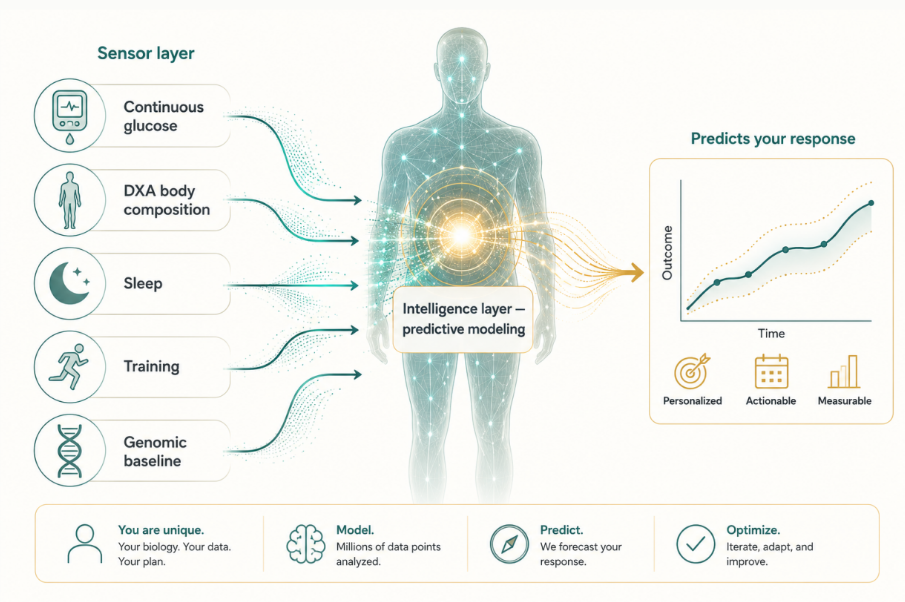
A longevity plan is a system, not a prescription: live data plus your genome feed a predictive model that forecasts how you’ll respond — instead of just recording what already happened.
But a twin doesn’t lift the weights or plate the protein — and this is where the human expert becomes indispensable. The trials are blunt about it: the drug handles the fat, while protein, resistance training, tolerability, and behavior determine whether a client ends up leaner and stronger or smaller and frailer. Those levers are the daily craft of dietitians, nutritionists, weight-loss and performance coaches, and executive coaches — the professionals who translate a data readout into a client actually hitting 2 grams per kilo, actually training three times a week, actually troubleshooting the meal that triggers reflux, and actually staying the course when access wobbles the way it did for Barkley. Prescribing and any peptide protocol stay with a qualified clinician; the science literacy that makes the whole thing work increasingly belongs to the Coach / Practitioner standing between the prescription and the result. In an era when patients arrive already asking for the injection by name, fluency in this material — the mechanism, the muscle math, the peptide frontier — is fast becoming the most valuable thing a health-and-performance professional can offer.
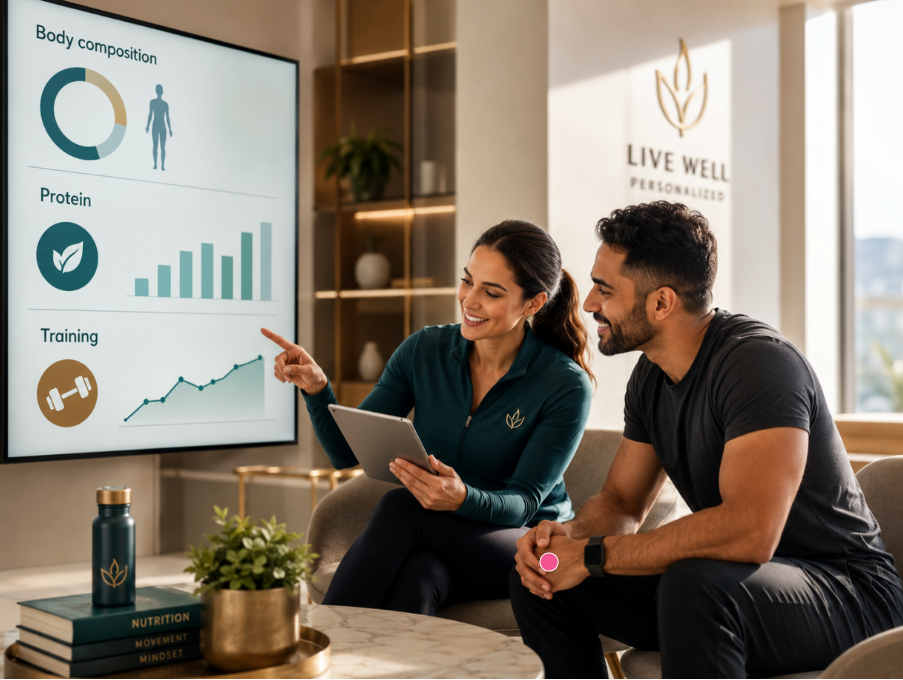
The molecule is the easy part. Dietitians, nutritionists, and performance and executive coaches are the expertise layer that turns a data readout into a client who actually hits their protein, trains, and stays the course.
The bottom line
Charles Barkley’s transformation wasn’t a drug story; it was a systems story with a very loud narrator. The pen held a peptide. The result came from pairing it with training, weathering the setbacks, and treating the whole thing as a project rather than a miracle. That is the entire lesson, scalable to anyone: a GLP-1 can be one of the most powerful longevity tools of the decade, or it can trade your fat for the very muscle that keeps you functional. The next generation of peptides may extend the toolkit further still. But the variable that decides the outcome was never the molecule.
It’s the measurement — and the expertise that reads it.
Sign Up for FREE Daily Longevity Club Workshops
Sign Up for Affiliate Program (Pays 20%)
Subscribe to the Longevity & Peptide Optimization Newsletter
About the Author

Tony Medrano is CEO and co-founder of LongevityPlan.AI, a platform that integrates performance and health data from athletes and leverages proprietary Digital Twin for Predictive Peptide Performance™ technology, wearable data, and biomarker data to deliver personalized performance optimization and longevity recommendations to athletes, coaches, organizations, businesses, government, and the military. In addition to being a 3x technology / AI company CEO with 2 successful exits, Tony has also finished 3 Full Ironman Triathlons (140.6 mi) since 2019. He has degrees from Harvard University, Columbia University, and a JD/MBA from Stanford University.
Tony has been involved with AI and molecular diagnostic start-ups for 10 years, and also worked with the US Olympic Team, National Basketball Association (NBA), National Football League (NFL), Major League Baseball (MLB), Iditarod, FBI, NASA, U.S. Department of Health and Human Services (HHS), Google, Microsoft, Netflix, Bridgewater Associates, ConocoPhillips, British Petroleum, One Medical, and Jenny Craig, Inc. to provide technology, artificial intelligence and/or molecular diagnostics solutions to their employees.
One of Tony’s prior companies provided Conversational AI to health, fitness, and wellness companies; another delivered access to digital libraries of British Petroleum for oil discovery; and his first was a mobile app platform funded by Softbank, which resulted in a case study published by Stanford University Press, and was taught in multiple MBA programs for a decade. Tony loves to teach and mentor; he earned public school teaching credentials in NY and MA and taught inner-city high school students to give back to the underprivileged community in Harlem. He also lectured on entrepreneurship and venture capital to second-year MBA students at Stanford Business School for five years. He co-authored one of the first issued patents for mobile applications. Tony also served as a US Navy Officer commanding an emergency response team on a USN Destroyer. Tony’s military-to-CEO career has recently been chosen to air on an episode of “Operation CEO” a documentary by InsideSuccess.TV, which will air on AppleTV, Prime Video & Amazon MGM Studios, YouTubeTV, and other major platforms worldwide in 2026.
Tony’s Chronological Age is 55, his Metabolic Age is 41, and his Biological Age is 28. He is using a 12-peptide protocol from LongevityPlan.AI that leverages his AI-powered Digital Twin and is currently training for his 4th Ironman Triathlon.
For educational purposes only; not medical advice. GLP-1 medications, dosing, and any use of compounded or research peptides should be directed by a qualified, licensed clinician who knows your history. Peptide regulatory status is actively changing — verify current FDA guidance before acting. This is a sensitive area of medicine, and individual results and risks vary widely.
Endnotes
- Barkley describing his routine (“working out… shot once a week”) on The Pat McAfee Show, as reported by The SportsRush, 2024. thesportsrush.com
- Barkley on losing access to Mounjaro during shortages and subsequent regain; transformation details (352→~290 lbs). SportsNet Pittsburgh, 2026. sportsnetpittsburgh.com
- Camilleri M. et al., “Clinical Consequences of Delayed Gastric Emptying With GLP-1 Receptor Agonists and Tirzepatide,” J Clin Endocrinol Metab, 2025;110(1):1 (mechanism; cardiovascular, renal, and MASLD benefits). Oxford Academic / PMC11651700
- GI adverse-event rates (nausea 15–44%, vomiting 5–24%, constipation 10–24%) per FDA labeling summaries, compiled in the Fella Health clinical guide, 2025. fellahealth.com
- Tolerability guidance (smaller, more frequent, lower-fat meals; gradual titration), same source. fellahealth.com
- “Gastric POCUS for Airway Management in Patients Using GLP-1 Receptor Agonists” (delayed emptying, nausea, vomiting, abdominal distension), ClinicalTrials.gov NCT06666049. clinicaltrials.gov
- Tinsley G.M., Nadolsky S., “Preservation of lean soft tissue during weight loss induced by GLP-1 and GLP-1/GIP receptor agonists: A case series,” SAGE Open Med Case Rep, 2025 (26–40% of weight lost as lean tissue; resistance-training outcomes −6.9%, +2.5%, +5.8%). SAGE / PMC12536186
- American Diabetes Association, “New GLP-1 Therapies Enhance Quality of Weight Loss by Improving Muscle Preservation” (lean mass 15–40% of weight lost; 587% five-year increase in incretin use), 85th Scientific Sessions, 2025. diabetes.org
- Gabrielle Lyon, MD — publicly documented “muscle-centric medicine” framework (author’s characterization of her widely published position). drgabriellelyon.com
- Peter Attia, MD — publicly documented emphasis on building muscle and strength for the functional “marginal decade” (author’s characterization of his widely published position). peterattiamd.com
- Wilding J.P.H. et al., “Once-Weekly Semaglutide in Adults with Overweight or Obesity (STEP 1),” NEJM 2021;384:989–1002 (body-composition substudy); protein targets per current GLP-1 clinical-nutrition guidance. DOI:10.1056/NEJMoa2032183
- “LEAN mass Preservation with Resistance Exercise and Protein during semaglutide and tirzepatide therapy (LEAN-PREP): protocol for an RCT,” 2025. PMC13110620
- Hendershot C.S., Klein K.R. et al., “Once-Weekly Semaglutide in Adults With Alcohol Use Disorder: A Randomized Clinical Trial,” JAMA Psychiatry, 2025. DOI:10.1001/jamapsychiatry.2024.4789. PMC11822619
- Reductions in cigarettes/day among smokers in the semaglutide AUD trial. Brain & Behavior Research Foundation summary, 2025. bbrfoundation.org
- UNC Health Newsroom, “Semaglutide Shows Promise in Reducing Cravings for Alcohol, Heavy Drinking” (Klein on brain-mediated reward mechanism), 2025. unchealthcare.org
- “The effects of GLP-1 receptor agonists on alcohol-related outcomes: a systematic review and meta-analysis,” 2025 (3 RCTs, N=430; 6 observational, N≈2.74M). PMC12805745
- Staresinic M. et al., “Gastric pentadecapeptide BPC 157 accelerates healing of transected rat Achilles tendon,” J Orthop Res 2003;21:976–983 (increased load-to-failure, Young’s modulus, functional index), as reviewed in Gwyer et al., Cell Tissue Res 2019. Springer
- Chang C-H. et al., “Pentadecapeptide BPC 157 Enhances the Growth Hormone Receptor Expression in Tendon Fibroblasts” (rat Achilles). PMC6271067
- Maryland Orthopedic Specialists clinical summary of BPC-157 animal evidence across tendon, ligament, muscle-crush, and bone-healing models, 2026. mdorthospecialists.com
- “Regeneration or Risk? A Narrative Review of BPC-157 for Musculoskeletal Healing” (favorable preclinical safety; no identified toxic/lethal thresholds; no teratogenic/genotoxic effects). PMC12446177
- Vasireddi N. et al. (2025) systematic review — 35 preclinical studies vs. 1 clinical study; first human IV safety pilot reported no adverse events — as summarized in RethinkPeptides’ evidence review, 2026. rethinkpeptides.com
- U.S. DoD Operation Supplement Safety, “BPC-157: A Prohibited Peptide and an Unapproved Drug” (not FDA-approved; WADA S0; DoD prohibited list). opss.org
- New Drug Loft / VLS Pharmacy, “Regulatory Updates on Compounded Peptides” (April 2026 removal of BPC-157, TB-500, CJC-1295 from Category 2; not moved to Category 1; regulatory gray zone), 2026. newdrugloft.com
- OptiMantra, “FDA Signals Major Shift on Peptides: Category 2 Removals” (affected peptides; PCAC review timing), 2026. optimantra.com
- Additional background on BPC-157 pharmacology and regulatory status: “Multifunctionality and Possible Medical Application of the BPC 157 Peptide — Literature and Patent Review,” PMC11859134. General reference: BPC-157 overview.
